


Few things interrupt a morning walk, commute, or coffee break faster than a clear pair of glasses turning cloudy. If you are wondering how to keep glasses from fogging, the answer starts with understanding where the moisture comes from, then matching the fix to the situation. This guide covers safe cleaning habits, mask and weather adjustments, and eyewear features worth comparing without promising that every frame has a built-in anti-fog coating.
Shop SAV eyewear care essentials and keep a soft lens cloth close for the moments when condensation appears.
Why Do Glasses Fog Up?
Key takeaway: Fog forms when warm, moisture-heavy air reaches a cooler lens and condenses into tiny droplets that scatter light.
- Temperature changes are a common trigger.
- Breath, sweat, steam, and humid air can add moisture.
- Wiping clean lenses and reducing the airflow gap often helps first.
Fog is condensation, not dirt. When a cool lens meets warmer, humid air, water vapor can collect on its surface as many tiny droplets. Those droplets scatter light and create the familiar milky haze. The same basic process can happen when you step indoors from cold weather, stand near a simmering pot, or exercise outside.
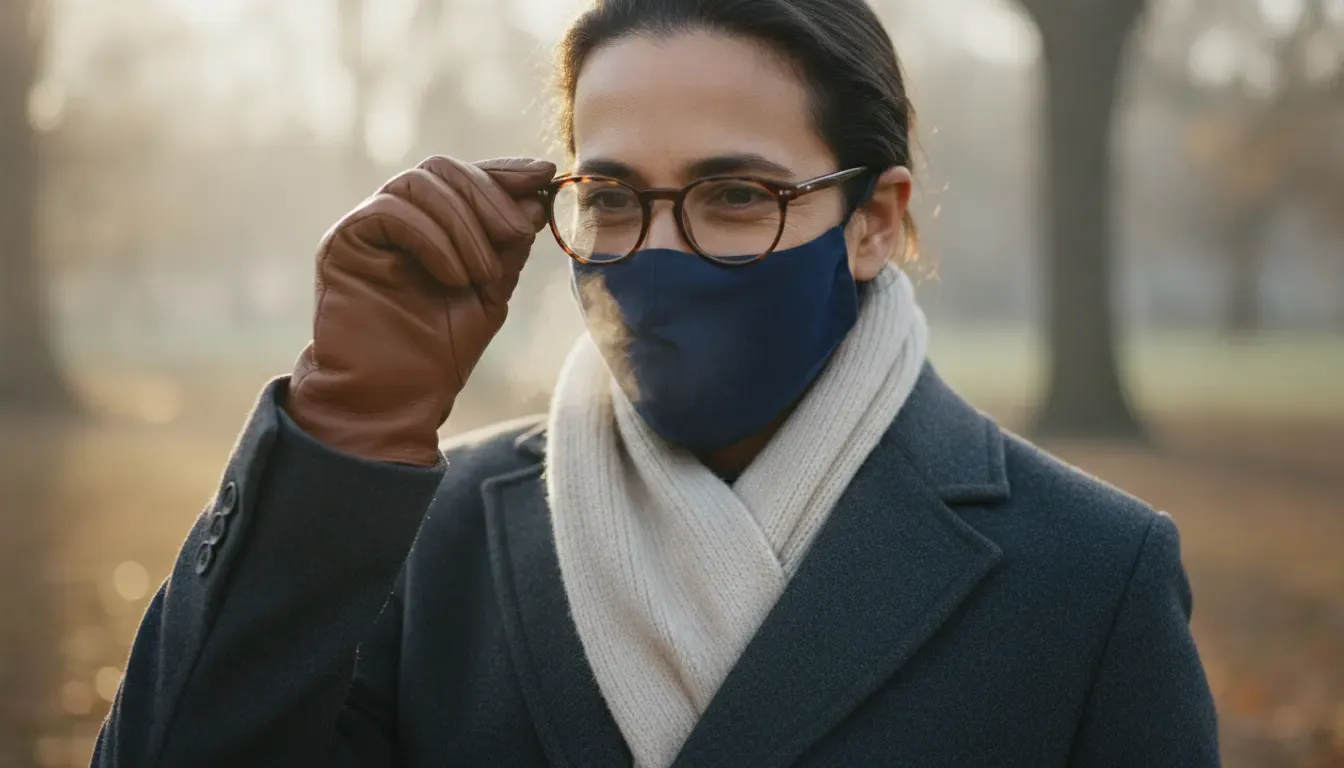
Warm breath is another frequent cause. A face covering, scarf, or high collar can direct exhaled air upward toward the lenses. The U.S. Department of Veterans Affairs describes this mechanism and recommends reducing the gap near the bridge of the nose, while also cautioning that some anti-fog products may not suit every lens coating. You can read the VA eye-care handout for that basic safety guidance.
The right response depends on the trigger. A quick transition from cold to warm air may call for patience and a gentle wipe. Repeated fogging during outdoor activity may call for better airflow, a secure fit, or a purpose-made lens cloth.
How Can You Keep Glasses from Fogging in Daily Situations?
Key takeaway: Reduce warm air reaching the lenses, let temperature changes settle, and handle the lenses with clean materials.
- Fit a mask or scarf so less air escapes toward the eyes.
- Give cold glasses a moment to warm gradually.
- Use a clean microfiber or anti-fog cloth rather than a shirt sleeve.
Start with the least aggressive change. If a mask is pushing breath upward, improve the seal across the nose and place the glasses so the bridge sits securely without pressing uncomfortably. A folded tissue at the top edge may help some people, but it should not interfere with breathing, comfort, or the mask's intended fit.
When you move between temperatures, avoid immediately rubbing a hazy lens with whatever fabric is nearby. Let the glasses warm for a moment, then use a clean lens cloth. This gives condensation time to clear and helps prevent the fine grit on clothing from moving across the lens surface.
Steam and cooking create similar problems. Move a little farther from the source, improve ventilation when appropriate, and keep the glasses away from direct splashes. If you are outdoors, a brimmed hat or a frame that stays stable while walking can reduce the need to touch the lenses repeatedly.
Do not assume every home remedy is safe for every lens. Soap, shaving products, paper towels, and household sprays can leave residue or interact poorly with coatings. If a product is labeled for optical lenses, follow its directions and test it as directed. For coated lenses, the manufacturer's care guidance should take priority over a viral cleaning tip.
What Is the Safest Way to Clean Foggy Glasses?
Key takeaway: Clean away grit first, use a product made for optical lenses, and dry with a fresh microfiber cloth using light pressure.
- Wash or rinse away particles before wiping when the lens material allows it.
- Use a clean cloth reserved for eyewear.
- Never polish a lens with a dirty sleeve, tissue, or rough paper.
Cleaning and defogging are related but different jobs. Cleaning removes oils and particles; an anti-fog treatment is designed to help moisture spread more evenly or clear more easily. Begin by following the care instructions for the lens. If rinsing is appropriate for your eyewear, use clean, lukewarm water to loosen surface particles before drying. Otherwise, use the lens-cleaning method recommended by the frame or lens maker.
Use light, even strokes with a clean microfiber cloth. Fold the cloth so you are working with a fresh section, especially after wiping fingerprints or outdoor dust. Wash the cloth regularly without fabric softener, which can leave a film. Keep it in a case or clean pocket instead of loose in a bag with keys.
SAV's Fog Killer Eyewear Cleaning Cloth is described on its product page as formulated for optical lenses and suitable for anti-reflective coated lenses. The listed instructions say to wash the lens clean before application, then use the cloth on both sides for about 5 to 10 cycles. Follow the product directions and stop if your lens manufacturer gives different care instructions.
SAV also offers a Reusable Anti-Fog Cloth. Compare the product instructions, lens compatibility, and reusable format before choosing a cloth. Neither product should be treated as a substitute for professional advice about damaged coatings or persistent vision problems.
Explore SAV anti-fog lens cloths and compare the care instructions before adding one to your eyewear kit.
Related products

Elevate your eyewear experience with the SAV Eyewear Fog Killer Eyewear Cleaning Cloth.
View product
Which Eyewear Features Are Worth Comparing for Foggy Conditions?
Key takeaway: Prioritize a stable fit, useful airflow, easy cleaning, and a lens feature that matches your environment instead of assuming a product is anti-fog.
- Frames should stay in place without constant adjustment.
- Sport-focused shapes can help with stability during movement.
- Polarization, UV protection, blue light filtering, and anti-fog care solve different problems.
Eyewear design can make fogging easier or harder to manage, but shoppers should separate related features. A secure frame fit may reduce movement and the urge to touch the lenses. Adjustable nose pads, spring hinges, and flexible materials can improve comfort for some wearers. Ventilation may help in active settings, although a frame should not be described as anti-fog unless the specific product page makes that claim.
Sportex is a useful collection to compare when you need eyewear that stays comfortable during outdoor activity. SAV describes Sportex as a performance line with sport-focused designs, and some models include features such as TR90 frames or polarized lenses. Browse Sportex performance eyewear for the current selection and confirm the features listed on the individual product page.
Lens technologies should also be matched to the problem. Polarization helps reduce reflected glare outdoors. Blue light filtering is intended for digital screen use. UV protection addresses sunlight exposure. None of those features, by itself, means a lens will not fog. If fogging is your main concern, look for clearly stated lens-care instructions or an anti-fog product designed for optical lenses.

How Should You Handle Fogging During Exercise or Outdoor Activity?
Key takeaway: Prepare before activity, reduce unnecessary lens contact, and choose stable performance eyewear while keeping a compatible cloth accessible.
- Carry a clean cloth in a protected pocket or case.
- Pause in a safe place before wiping lenses.
- Check fit and lens features before relying on eyewear for an active setting.
Exercise adds heat, sweat, humidity, and frequent changes in airflow. Before starting, clean the lenses, check that the temples and nose bridge feel stable, and pack a microfiber or anti-fog cloth. During a walk, ride, or round of golf, move to a safe location before cleaning rather than wiping while in motion.
Sport-specific eyewear can be more comfortable than loose everyday frames during activity, especially when the fit keeps the lenses in a consistent position. That does not guarantee clear lenses in every climate. Fogging depends on temperature, humidity, exertion, face coverings, and the lens surface, so test your setup in the conditions where you plan to use it.
If the frame repeatedly slips, pinches, or blocks peripheral vision, the problem may be fit rather than fog. A retailer's product specifications can help you compare frame materials, shape, lens coverage, and available magnification. For reading needs outdoors, confirm whether the model is a reader, sunglass reader, or non-magnifying performance option before ordering.
What Should You Avoid When Trying to Stop Glasses from Fogging?
Key takeaway: Avoid abrasive wiping, unverified chemicals, and unsupported product assumptions that can damage lenses or create a false sense of protection.
- Do not use paper towels or clothing with visible grit.
- Do not mix household chemicals or apply products not made for eyewear.
- Do not rely on a general lens feature as proof of anti-fog performance.
Some quick fixes are popular because they are convenient, not because they are universally safe. Abrasive materials can create fine scratches. Household cleaners may contain ingredients that are not intended for optical coatings. Even a method that works on one lens can be a poor match for another.
Do not polish through persistent fog by pressing harder. Rinse or clean according to the lens instructions, then use a compatible cloth. If the lens remains hazy, the coating looks damaged, or your vision changes independently of condensation, stop experimenting and ask an eye-care professional or the lens manufacturer for guidance.
Finally, do not confuse a clean lens with an anti-fog lens. A clean lens can still fog when warm moisture meets a cool surface. The goal is to combine safe care, sensible environmental adjustments, and eyewear that suits the activity.
Browse SAV reading glasses to find a comfortable everyday frame, then pair it with care habits that keep your view clearer.
Frequently Asked Questions About Foggy Glasses
Key takeaway: Most fogging solutions begin with reducing warm moisture near the lenses and cleaning them with products made for optical use.
- Fog is condensation caused by temperature and moisture.
- Fit, airflow, and lens care all matter.
- Specific product claims should be checked on the live product page.
Why do my glasses fog when I wear a mask?
Warm, moist breath can escape through the top of a mask and reach the cooler lenses. Improving the fit around the bridge, positioning the glasses securely, and using compatible lens care may reduce the problem.
Can I use soap to stop my glasses from fogging?
Some people use mild soap as a temporary film, but it is not automatically safe for every lens or coating. Follow the lens maker's care instructions and choose an optical-lens product when possible.
Do polarized glasses stop fogging?
No. Polarization is designed to reduce reflected glare, not to prevent condensation. A polarized lens can still fog when warm, humid air reaches a cool surface.
Are anti-fog cloths safe for coated lenses?
Safety depends on the product and the coating. Check the product directions and the lens manufacturer's guidance. SAV's Fog Killer product page specifically describes compatibility with anti-reflective coated lenses, but instructions still matter.