


Finding a scratch across your lenses can make an otherwise usable pair feel finished. If you are searching for how to remove scratches from glasses, the safest answer is usually not a household polish or abrasive paste: most true lens scratches cannot be buffed away at home without risking more surface damage. This guide explains what you can safely do, which popular fixes to skip, and when shopping for a replacement pair makes more sense.
Shop SAV reading glasses and find a clear, comfortable replacement pair.
Can you remove scratches from glasses at home?
Key takeaway: You can remove dirt, film, and loose debris that look like scratches, but a genuine scratch is a physical mark in the lens surface or coating and usually cannot be safely erased with a home remedy.
- Rinse away dust before touching the lens.
- Use a clean microfiber cloth only after the surface is wet.
- Stop if the mark remains after gentle cleaning.
First, make sure you are dealing with a scratch rather than residue. Hold the glasses under soft light and look from several angles. A smudge, dried spray, or tiny piece of grit may disappear after a careful rinse. A mark that stays in the same place, catches the light, or appears as a fine line after cleaning is more likely to be a scratch.
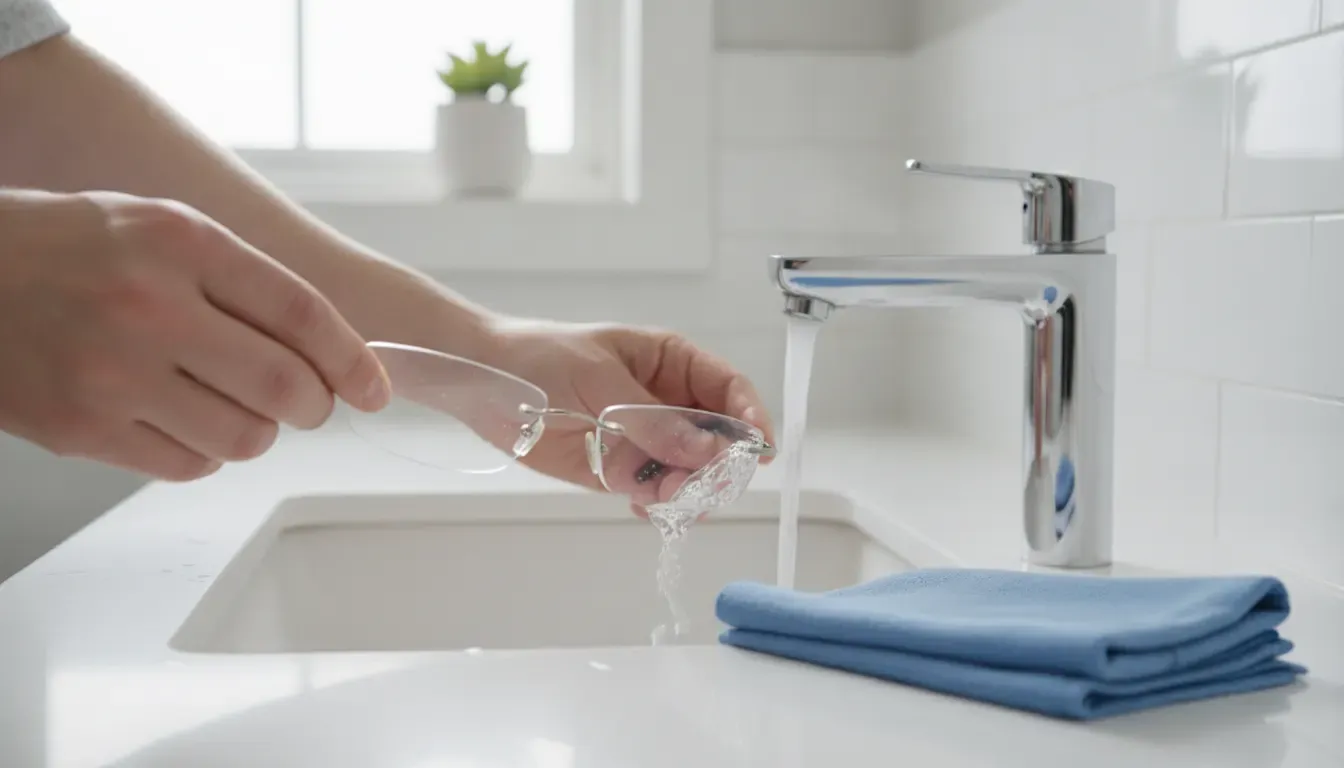
Do not start by rubbing harder. Dry rubbing can move dust across the lens and create additional micro-scratches. Instead, rinse both sides with lukewarm water, use a small amount of mild dish soap if needed, rinse again, and gently dry with a clean microfiber cloth. This is a cleaning step, not a scratch-repair method. If the line remains, the lens has not been restored.
For a professional perspective on why scratches are not something to polish away casually, see the ZEISS guide to cleaning and caring for glasses. Its guidance also explains why dust, clothing, and tissues can worsen lens damage during cleaning.
Why should you avoid toothpaste, baking soda, and polishing compounds?
Key takeaway: Toothpaste, baking soda, car polish, and similar DIY abrasives can remove or roughen a coating while leaving the original scratch in place, so they are a poor trade-off for everyday eyewear.
- Abrasives can create a cloudy or uneven surface.
- Rubbing can spread damage beyond the original mark.
- Coating damage may be more noticeable than the first scratch.
Many scratch-removal tips work by sanding or polishing a surface. That approach may be appropriate for some household materials, but eyewear lenses are precision-made surfaces with coatings and optical zones. Removing material unevenly can change how light passes through the lens, create haze, or make glare more distracting.
Toothpaste is especially misleading because it feels smooth while still containing polishing particles. Baking soda is also abrasive. Car wax, glass polish, metal polish, and household cleaners can leave residue or interact poorly with lens coatings. Even if a mark seems less visible for a moment, the surface may be less uniform afterward.
Never use a razor, abrasive sponge, sandpaper, or a hard edge to scrape a lens. Do not try to fill a scratch with oil or wax. These methods do not restore the lens and can make it harder for an optical professional to assess the damage later.
What is the safest way to check a scratched lens?
Key takeaway: Clean first, inspect second, and avoid experimenting with the lens surface; this simple order helps you distinguish removable residue from damage that needs an informed replacement decision.
- Wash and dry your hands before handling the frame.
- Rinse the lenses before wiping them.
- Inspect the mark in bright, indirect light.
Use this short check before deciding what to do next:
- Wash your hands so skin oils and grit do not transfer to the lenses.
- Rinse the glasses under lukewarm running water to loosen dust.
- Apply a small amount of mild dish soap when the lens needs more than water.
- Rinse thoroughly and pat or air-dry before using a clean microfiber cloth.
- Inspect the lens without pressing on it. Tilt the glasses to see whether the mark changes with the light.
| What you see. | Best next step. | Why it matters. |
|---|---|---|
| Smudge, film, or loose grit. | Rinse and clean gently. | Residue can look like a scratch but may be removable. |
| A fine line that remains after cleaning. | Stop rubbing and assess replacement options. | A persistent line is more likely to be surface damage. |
| Cloudy, peeling, or patchy coating. | Ask an optical professional about the lens. | Coating failure is not fixed by household polish. |
| A crack, chip, or sharp edge. | Stop using the pair if it feels unsafe and seek an evaluation. | Structural damage needs more than a cleaning solution. |
This check is intentionally conservative. It does not diagnose a lens or replace professional advice. It simply helps prevent a common mistake: turning a small mark into broader haze by testing one abrasive remedy after another.
Related products

Maintain the pristine clarity of your eyewear and devices with SAV Eyewear's 40 Count Eyewear Lens Wipes - LW40.
View productWhen should scratched glasses be replaced?
Key takeaway: Replacement is worth considering when scratches sit in your main viewing area, scatter light, keep distracting you, or appear alongside coating loss, cracks, or chips.
- Notice whether the mark affects reading, screen work, or outdoor visibility.
- Consider how much the scratch distracts you during ordinary wear.
- Replace the pair when damage makes the lenses uncomfortable or impractical to use.
There is no single scratch size that decides the issue for everyone. A shallow mark near the edge may be easy to ignore, while a smaller scratch across the center can be distracting every time you look through it. Pay attention to the real-world effect rather than trying to measure the line with a ruler.
Replacement becomes the sensible next step when the scratch repeatedly catches your attention, creates distracting reflections, or makes reading and screen work less comfortable. The American Academy of Ophthalmology's discussion of scratched eyeglasses notes that scratches can be annoying and may contribute to visual discomfort, while the decision to replace depends on how much they interfere with use.
If the lens is cracked, chipped, peeling, or sharp, do not try to repair it with a DIY kit. Set the pair aside and ask an optical professional about the safest option. If the frame is still comfortable and fits well, a lens replacement may be possible through an optical provider. If the whole pair is worn, loose, or no longer suits your needs, shopping for new eyewear may be the simpler choice.
Browse SAV sunglasses for a fresh pair with everyday UV-focused coverage and style.
How can you prevent scratches on a replacement pair?
Key takeaway: The best scratch strategy is routine handling that keeps grit away from the lens: rinse before wiping, use a clean cloth, and store glasses in a protective case.
- Keep a clean microfiber cloth with your eyewear.
- Store glasses in a hard case when they are not being worn.
- Keep lenses away from keys, coins, and loose items in a bag.
Prevention matters because no scratch-removal trick can reliably restore a damaged lens. Do not clean dry lenses when visible dust is present. Rinse first, then use a lens-safe cleaning method. Launder microfiber cloths regularly and keep them away from grit, hair products, and household surfaces that can transfer particles back to the lens.
Use a case instead of placing glasses lens-down on a table, counter, or car console. Avoid carrying them loose with keys or other hard objects. Heat, pressure, and repeated friction can also shorten the useful life of eyewear, so choose a storage spot that protects the frame as well as the lenses.
For a deeper prevention routine, read SAV Eyewear's guide to cleaning glasses without scratching them. That article covers the habits that help keep a new pair clearer for longer, while this guide focuses on what to do after a scratch has already appeared.
How should you choose replacement glasses after lens damage?
Key takeaway: Choose a replacement around the way you use your eyewear, including reading distance, outdoor brightness, activity, frame comfort, and the lens features that matter most to you.
- Match the frame to your daily fit and face comfort.
- Choose reading, sunglass, or blue-light features for the actual task.
- Consider flexible or lightweight materials when durability and comfort are priorities.
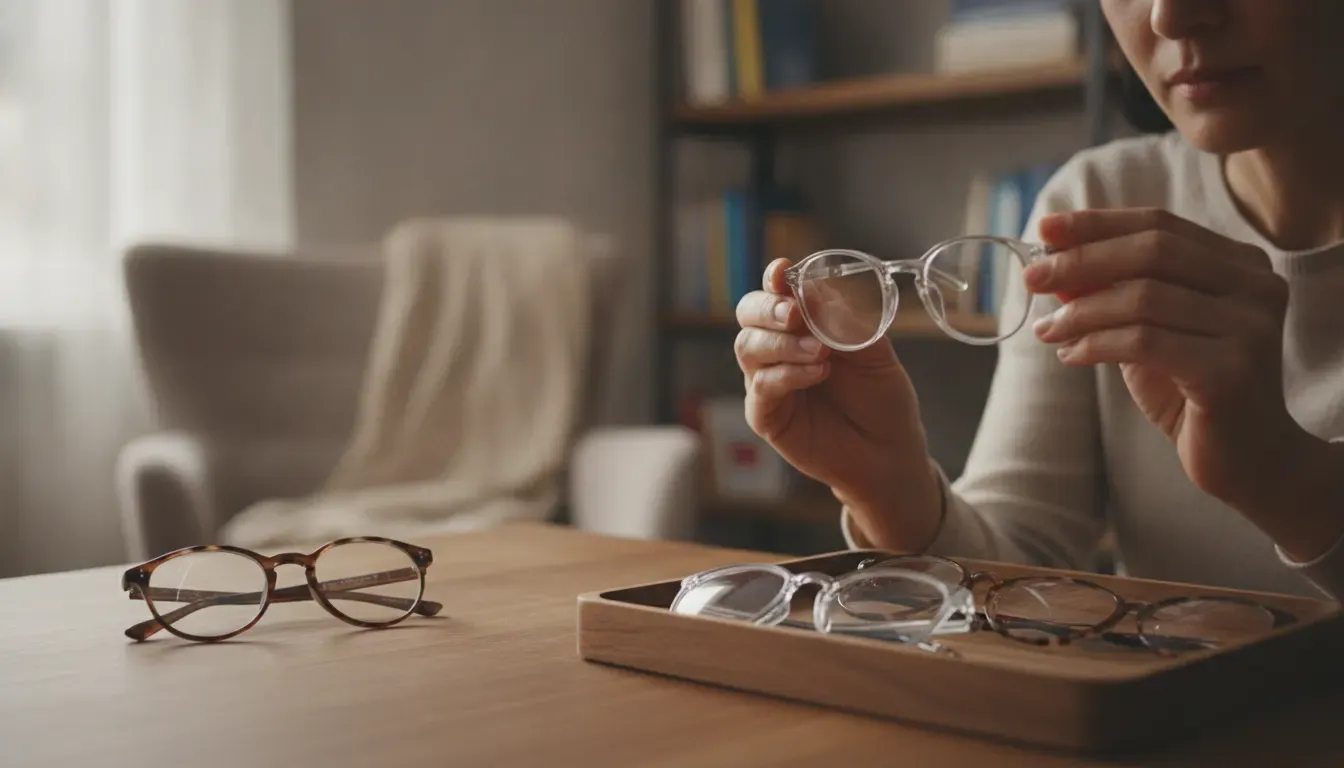
Start with the job the glasses need to do. Readers should feel stable while you work at your usual reading distance. Sunglasses should provide the coverage and tint you want for bright outdoor use. Blue light glasses may suit screen-focused routines, while performance eyewear can make more sense for active days.
Next, consider the frame. A comfortable fit is more likely to stay in its case when you take it off, reducing the chance of another scratch. Lightweight materials such as TR90 or bamboo can be appealing when you want an easy everyday pair, while flexible styles may suit people who handle their glasses frequently.
SAV Eyewear offers reading glasses, sunglasses, and activity-focused options in a range of shapes and lens technologies. Compare the collection details rather than choosing solely by appearance, and select a pair that fits the situation that caused you to need a replacement.
Explore SAV Sportex eyewear for active days when a secure, performance-focused fit matters.
What are the most common questions about scratched glasses?
Key takeaway: A careful rinse can reveal whether a mark is residue, but a true scratch generally calls for leaving the surface alone and deciding whether an optical evaluation or replacement pair is appropriate.
- Skip abrasive home remedies.
- Replace eyewear when damage interferes with use.
- Prevent repeat damage with careful cleaning and storage.
Can you get rid of scratches off glasses?
You can clean away residue that resembles a scratch, but true lens scratches usually cannot be safely removed at home. If the mark remains after a gentle rinse and microfiber dry, stop experimenting with abrasives and consider an optical evaluation or replacement.
Does WD-40 remove scratches from glasses?
No. WD-40 is not a lens-cleaning or scratch-repair product. Do not apply it to eyewear. It can leave residue and is not an appropriate substitute for a lens-safe cleaning method.
Can toothpaste remove scratches from glass lenses?
Toothpaste may contain abrasive particles that can roughen a lens or damage a coating without restoring the original surface. It is safer to skip the experiment and use gentle cleaning only to remove residue.
Can eyeglass lenses have scratches removed professionally?
An optical professional can assess the damage and explain whether a lens replacement or new pair is practical. The answer depends on the lens, coating, frame, and location of the damage. Do not assume a polishing kit will produce the same result.
When a mark will not wash away, the safest approach is to stop trying to polish it out. Protect the pair from further damage, decide whether the scratch affects how you use the glasses, and shop for a comfortable replacement when it does.