


Choosing readers is not only about picking the strongest magnification. The best pair should make your usual close-up task feel clear and comfortable at the distance where you actually use it. Whether that is a book, phone, craft project, or menu.
Browse women's reading glasses in styles made for everyday close-up tasks.
When comparing reading glasses for women strength, start with the plus power that gives you clear, relaxed text at your normal working distance. Reading-glass strength is measured in diopters, and the plus number indicates magnification. A lower power may suit some tasks, while a higher power is not automatically better. Fit, lens position, and how far you hold your reading material all matter too.
Once you understand what those plus numbers mean, you can test a starting point more thoughtfully. You can also recognize when a different strength, a better-fitting frame, or professional eye care makes more sense.
What Does Reading Glasses for Women Strength Mean?
The numbers printed on reading glasses describe magnification strength. Diopters are the units used to measure that strength, and non-prescription reading glasses use a plus symbol before the number, such as +1.00 or +2.00. A higher plus number generally means more magnification for close-up viewing. The number is a useful starting point, but it is not a complete description of what will feel best for every woman or every daily task.
Close-up focus can change gradually with age. The National Eye Institute describes presbyopia as a loss of the eyes' ability to focus on nearby objects, and notes that it usually begins after age 45. Mayo Clinic describes the same natural, age-related change as commonly beginning after age 40. Those broad patterns explain why many adults eventually explore readers, but they do not tell you which power to choose. Two women of the same age may prefer different strengths, especially if they read at different distances or use readers for different activities.
As a broad orientation, one sourced guide reports that many people use powers between +0.75 and +2.50 diopters. Treat that range as context rather than a prescription or a rigid chart. Your clearest comfortable view matters more than matching a number associated with your age. If you are comparing options, begin with the lower end that lets you read comfortably, then compare nearby powers while looking at real material you use every day.
Strength can also change over time. The gradual focus change associated with presbyopia may lead some people to move from lower to higher powers as close-up vision changes. That does not mean stronger is always better. A mismatch may leave text unfocused and contribute to headaches or eye strain. So increasing magnification without checking how the lenses feel can make the shopping process less useful.
For more practical context on comparing powers and choosing readers for everyday tasks, browse SAV's reading glasses buying guide. It can help you organize the decision, while your normal reading distance and comfortable clarity remain the most useful checks.
How Can You Compare Reading Glasses for Women Strength Without Guessing?
Choosing reading glasses for women strength does not have to mean relying on an age chart or picking the strongest magnification on the shelf. A better starting point is to match the glasses to what you do, how far away you hold it, and how comfortably you can read at that distance.
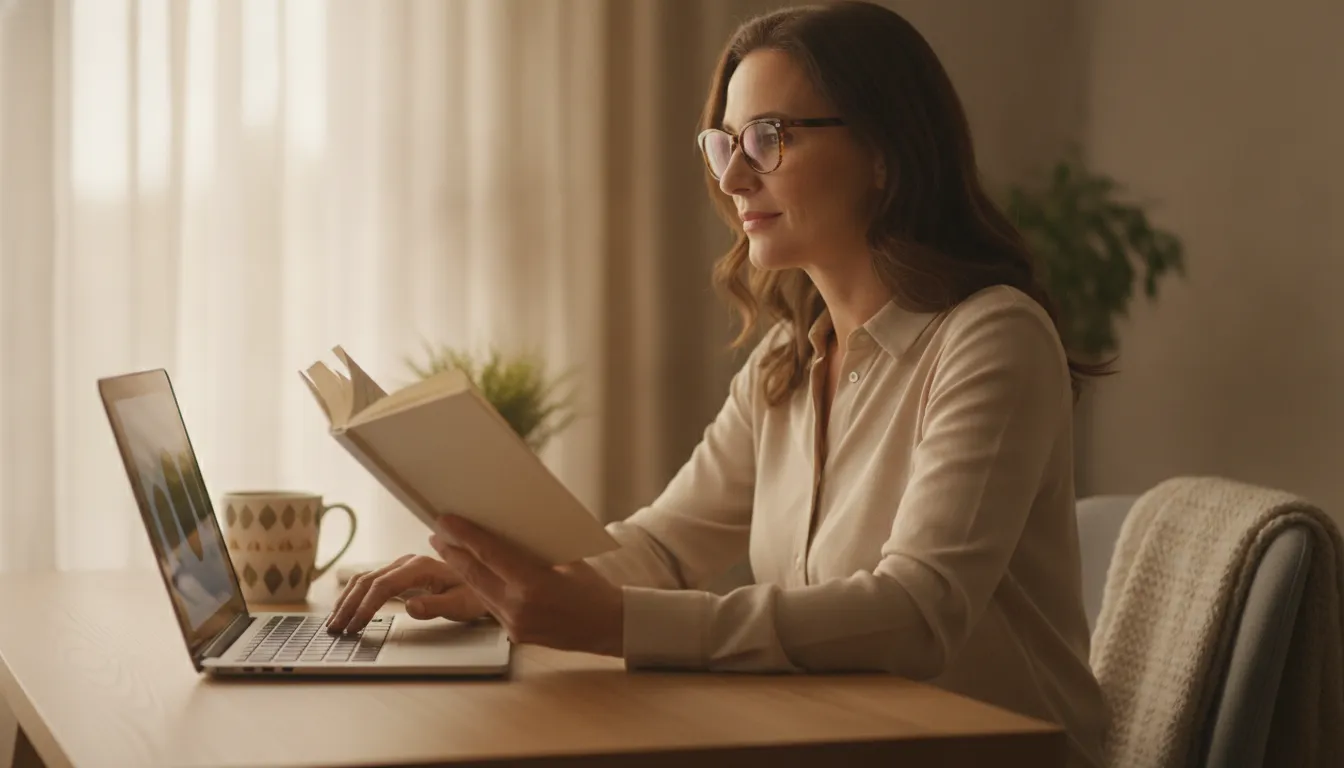
Use this simple process as a practical shopping guide. It is designed to help you compare non-prescription readers, not to diagnose a vision condition or replace an eye examination.
- Identify the task you want to make easier. Start with the activity that prompted you to shop. Are you reading a paperback, checking a phone, writing an email, studying a menu, or working on a hobby? These activities may look similar, but they can involve different distances and visual demands. A pair that feels comfortable for a book may not be the best choice for a laptop or a detailed craft.
- Notice your normal working distance. Hold your book, phone, or other reading material where you naturally use it. Do not pull it unusually close just to test a pair. The goal is clear viewing at the distance you actually use every day. A retailer testing method uses a 14-inch viewing distance and begins around +1.00 to +1.50 diopters, but treat that as a practical retailer method, not a medical rule. Your task and comfort still matter most.
- Begin with a lower power you can test comfortably. Reading-glass strength is measured in diopters, and the plus sign indicates the magnifying power. Broad consumer guidance often places many readers between +0.75 and +2.50 diopters, but that range is only orientation. If you are comparing available options, start at the lower end that seems plausible for your task rather than automatically reaching for the highest number.
- Read real material at its usual distance. Use the book, phone, menu, or other item you care about. Check several lines, move your eyes across the page, and look at both larger and smaller text. A chart can help you narrow the options, but real-life material gives you a more useful sense of whether the power works for your routine. If one option is close, compare a neighboring quarter-diopter power when available.
- Choose the clearest comfortable view. Stronger magnification is not automatically better. Select the power that lets you see comfortably without forcing the material closer, straining to keep text clear, or feeling that the image is unnaturally enlarged. SAV offers reading-glass powers from +1.00 to +4.00 in 0.25 increments, giving shoppers several steps to compare instead of one oversized jump.
- Recheck the choice during normal use. Wear the pair for the task you selected and pay attention to how your eyes feel. If text stays unfocused, or if headaches and eye strain appear, the power may not be the right match. Set it aside and reassess rather than assuming you simply need a stronger pair. Persistent or troubling symptoms deserve guidance from an eye-care professional.
Browse women's reading glasses to compare styles and starting powers for your everyday tasks.
Related products

Elevate your outdoor experience with the Sportex Bifocal Sunglass Readers SPSR02 Crosshair, engineered for precision.
View product
Always have a reliable pair of reading glasses within reach with the SAV Value Pack JR3P1.
View product
3 colors per pack, red, clear and brown or blue, grey and green
View productWhy Does Working Distance Change the Best Power?
The best reading-glass power depends partly on how far your eyes are from the task. A book, phone, craft project, menu, and computer screen may sit at different distances, so one pair can feel clear for one activity and less comfortable for another.
Working distance is the space between your eyes and what you are trying to see. It matters because reading glasses add magnification for close-up viewing, while your eyes still need to focus on the object at its actual distance. If words look blurry at a normal reading distance, or you find yourself holding a page farther away to focus, note that distance when comparing readers. The National Eye Institute identifies holding reading material farther away as one possible sign of difficulty focusing up close. Learn more about close-up focusing changes.
There is no single exact power that belongs to every task. Instead, notice where you use your readers most often, then test text at that distance. The table below offers a practical way to think about the differences without turning them into a rigid prescription.
| Task | What to consider | Useful shopping approach |
|---|---|---|
| Book or phone. | Text is usually held close, but your normal posture and arm length still matter. | Test a pair while holding the book or phone where you naturally use it. |
| Crafts or menus. | You may move between close detail and a slightly farther surface. | Prioritize a clear, relaxed view across the part of the task you do most. |
| Computer screen. | A screen may sit farther away than a book. Words can still look blurry at a normal screen distance. | Try readers at your desk rather than choosing only from a book-reading test. |
| Several distances. | One fixed pair may not feel equally useful for close text and a farther screen. | Consider separate task-specific readers or learn about readers versus progressives. |
For example, a woman who reads novels in the evening may prefer the view she gets at book distance. While someone who writes emails all day may judge comfort from a desk distance. A hobby can add another variation: small craft details may be close, but instructions or supplies may be farther away. Reading glasses are commonly used for books, email, and hobbies. So matching the pair to the activity is more helpful than assuming the strongest option is automatically the best one. Cleveland Clinic notes that words on a screen or page may appear blurry at a normal reading distance.
If you regularly switch between tasks, keep the distance in mind when you compare powers. The clearest pair is the one that lets you see your main task comfortably without forcing the material unusually close or far away. Persistent blur, headaches, or difficulty seeing should not be solved by repeatedly increasing magnification. In that situation, pause the trial and consider an eye-care evaluation.
What Fit Details Matter Beyond Magnification?
A clear view depends on more than the number printed on the lens. A frame that sits securely and comfortably keeps the lenses in the right place while you read, use your phone, or move between tasks. Start by checking whether the bridge rests comfortably on your nose without pinching or sliding. The temples should feel secure without pressing hard behind your ears, and the frame should stay level when you look down.

Frame width matters, too. If the sides extend far beyond your face, the glasses may shift during normal movement. If they feel tight at the temples, even a lightweight pair can become distracting over a longer reading session. Look for lenses that align naturally with your eyes rather than sitting noticeably low, high, or off-center. Stable placement helps you look through the intended part of the lens instead of constantly adjusting the frame.
Which shapes and materials feel right?
Shape is both a style decision and a practical one. SAV offers angular, cat-eye, oval, rectangle, round, and square shapes, so you can choose a look that feels expressive without giving up everyday function. Full-frame, rimless, and semi-rimless designs also create different visual profiles and weights. Browse women's reading glasses to compare styles made for different preferences.
Materials can change how a frame feels over time. Plastic, metal, bamboo, injected acetate, and recycled plastic each offer a different balance of structure, flexibility, and visual character. Helpful comfort features may include spring hinges that give the temples some room to move. Adjustable nose pads for a more personal fit, flexible temples, folding frames for portability, and soft-touch finishes. These features do not replace the right magnification, but they can make readers easier to wear consistently.
How can you check the fit at home?
Put the glasses on while using the task they are meant to support. Read at your usual distance and notice whether the frame remains stable when you look from page to screen. Check for pressure at the bridge, temples, and behind the ears after several minutes, not just during the first try-on. If you want more guidance on everyday comfort, explore these comfortable reading glasses options.
A well-fitting pair can support comfortable viewing, but fit does not diagnose a vision problem or determine whether a particular strength is medically appropriate. If text stays blurry or discomfort persists, stop increasing magnification automatically and consider an eye-care professional.
What Are Signs Your Reading Glasses Strength Is Not Suitable?
The right pair should make close-up work feel clearer and more comfortable, not create a new struggle. A short adjustment period can happen when you begin wearing readers, especially if the frames sit differently from your previous pair. Give yourself a little time to settle into the fit, then pay attention to what happens while reading, using your phone, or doing another familiar task.
If the experience remains uncomfortable, do not assume that a stronger power will automatically solve it. An incorrect reading-glasses power may contribute to unfocused text, headaches, or eye strain, according to the guidance summarized by Warby Parker. The best next step is usually to pause, reassess the task and distance, and compare a different strength rather than moving upward without testing.
Which signs suggest the strength needs another look?
- Text stays unfocused. Words may look enlarged but not genuinely clear. If you keep shifting the book or phone to find one small area of focus, the selected power may not suit your normal working distance.
- Headaches follow close-up work. A headache after reading is a reason to stop and reassess, particularly when it happens repeatedly with the same pair.
- Your eyes feel strained. Tired, achy, or tense eyes during ordinary reading can indicate that the setup is not comfortable for you. Eye strain and headaches are also recognized symptoms associated with difficulty seeing up close, as noted by the National Eye Institute.
- Blur persists at your usual distance. Blurred close-up vision at a typical reading distance is a sign to reconsider the glasses, the task, or both. A book, phone, craft, and computer screen may not sit at the same distance, so one pair may not feel equally useful for every activity.
Try the glasses with real material at the distance you normally use. Compare the clearest comfortable view, not simply the largest-looking letters. A lower power can be more practical if a stronger pair makes the image feel too magnified or uncomfortable. If you are still adapting, adjusting to new readers may offer useful wear and comfort tips.
Persistent blur, recurring headaches, or ongoing eye strain should not be treated as a shopping problem indefinitely. Reassess the strength, and consider an eye-care professional if symptoms continue or interfere with everyday close-up activities.
When Should You Ask an Eye-Care Professional?
Reading glasses can be a practical option for occasional close-up blur. They should not be used to explain away symptoms that persist, worsen, or affect everyday life. If blurry near vision keeps you from reading, doing close-up work, or enjoying normal activities. Make time for an eye-care professional rather than simply moving to a stronger pair. The Mayo Clinic specifically recommends an eye-doctor visit when near-vision changes interfere with daily activities.
A comprehensive eye exam can evaluate near-vision concerns, including whether presbyopia may be involved. The National Eye Institute notes that eye doctors can check for presbyopia as part of a comprehensive eye exam. An exam also gives you an opportunity to describe when the blur appears. How far away you hold your reading material, and whether symptoms occur with books, phones, screens, or other tasks. For helpful background on normal near-vision changes, you can read SAV's guide to reading glasses after 40.
Which symptoms should not wait?
Seek immediate medical care for sudden changes rather than testing different magnifications at home. Warning signs include sudden loss of vision in one eye, sudden hazy or blurred vision, flashes of light, black spots, halos around lights, or double vision. These symptoms can have causes that over-the-counter readers are not designed to address, so do not treat them as evidence that you need a higher plus power.
What about pain or ongoing discomfort?
Eye pain deserves professional attention, especially when it appears with a change in vision. Persistent headaches, eye strain, unfocused text, or blur after trying readers are also reasons to stop and reassess instead of automatically increasing magnification. A different working distance or frame may affect comfort, but ongoing symptoms should be discussed with an eye-care professional.
The goal is a clear boundary: use non-prescription readers as a shopping option for suitable close-up tasks. While relying on professional care for persistent, painful, double, sudden, or disruptive vision changes.
Bring your current readers, if you use them, and note which activities trigger symptoms. That information can help the professional understand your everyday viewing needs. Until persistent or unusual symptoms are evaluated, avoid assuming that a stronger lens is the safest or most effective answer.
Explore women's reading glasses to compare comfortable frames and powers for your routine before you review these common questions.
Frequently Asked Questions
How do I know which strength reading glasses to get?
Start with the task and the distance where you normally read. Try a lower power first, then compare it with nearby options while reading real text on your phone, a book, or a menu. Choose the lowest strength that gives you a clear, comfortable view without holding the material unusually far away. Reading-glass power is measured in diopters and usually appears with a plus sign.
What strength reading glasses do I need for a computer?
There is no single computer strength that works for every woman. A screen may sit farther away than a book or phone, so a pair that feels clear for close reading may feel too strong at a desk. Test readers at your usual screen distance, and consider whether you need a separate pair for computer work and another for closer tasks.
What strength reading glasses can you buy over the counter?
Over-the-counter readers are available in a range of plus powers. One reference describes most users as falling between +0.75 and +2.50 diopters, but that range is only a broad orientation, not a personal recommendation. SAV's reading-glass collection covers +1.00 to +4.00 in 0.25-diopter increments, so shoppers can compare nearby strengths. Source: Warby Parker's reading-glass strength guide.
When should I stop testing readers and seek eye care?
If blurry near vision continues to interfere with reading or daily activities, arrange a comprehensive eye exam rather than simply moving to a stronger pair. Headaches, eye strain, unfocused text, double vision, sudden hazy or lost vision, flashes, or halos also deserve prompt attention. Sudden vision changes or double vision require immediate medical care. Sources: National Eye Institute and Mayo Clinic.
Ready to Find Your Everyday Reading Pair?
The right reading glasses for women strength can make close-up tasks feel more comfortable when the power, working distance, and frame fit suit your routine. Browse SAV Eyewear women's reading glasses to explore styles and find a comfortable strength for reading, screen time, hobbies, and other everyday tasks.